
Dental implant recovery time has two parts. The first round of healing takes about one week, and the jawbone then needs roughly three to nine months to fuse with the implant. That second part happens under the gum, so the stretch you'll notice most is the first week or two.
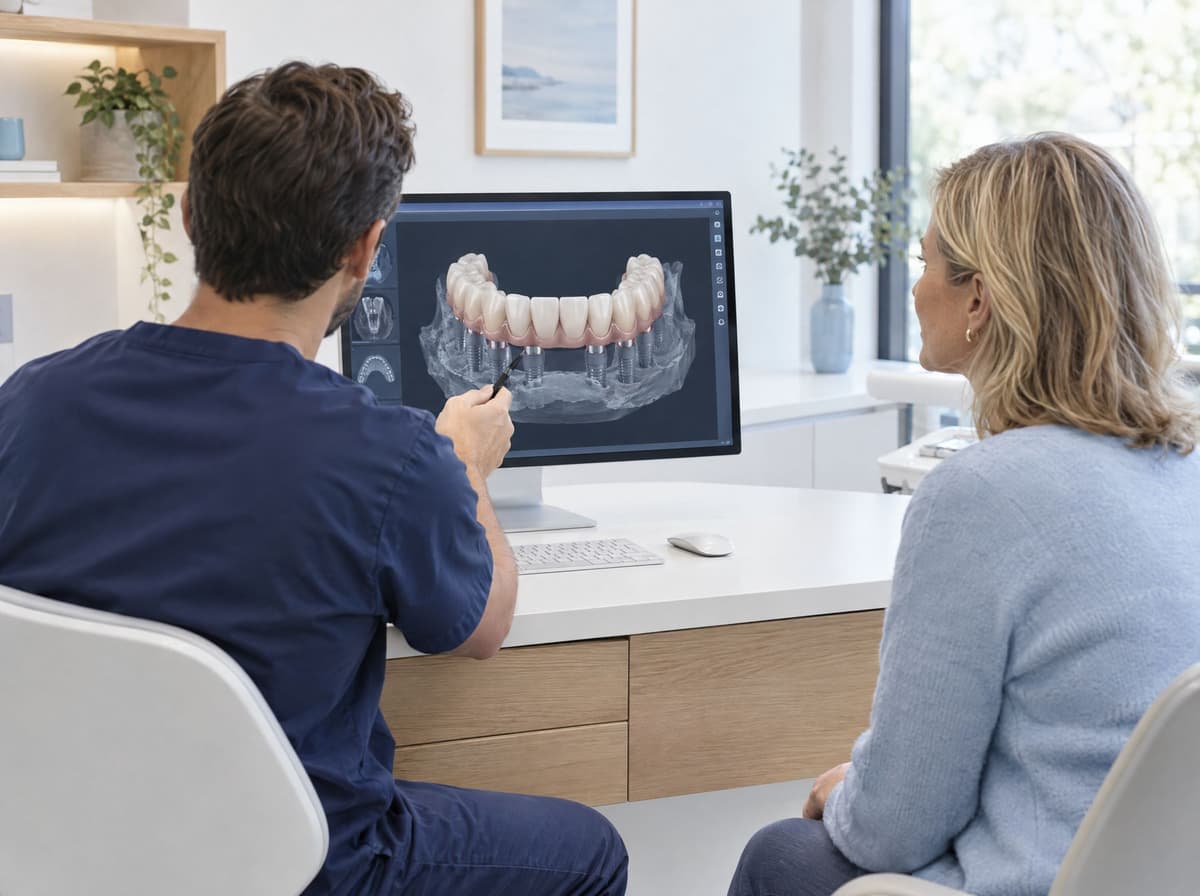
At Smiles Creator in Woodland Hills, Dr. Nader Ahdout places every implant himself and plans each one on a 3D CT scan taken in our office.
| Stage | Timing | What's happening |
|---|---|---|
| Right after surgery | Day 1 to 3 | Soreness, swelling, a blood clot forms |
| First round of healing | About 1 week | Discomfort eases, gums begin to settle |
| Bone fusing (osseointegration) | 3 to 9 months | Bone grows around the implant |
| Final tooth | After healing | Abutment and crown attached |
How long is dental implant recovery?
About one week for the first round of healing, and three to nine months for the bone. Both figures come from Cleveland Clinic, which adds that the timing depends on how quickly your body heals.
The range is wide because every mouth is different. Bone quality, your general health and the number of implants all play a part, so Dr. Ahdout gives you a timeline for your own plan at your consultation. For the longer view, see how long dental implants last.
What are the dental implant healing stages?
The implant heals in overlapping stages, from a blood clot to mature bone. A 2023 review in Cureus describes four: initial healing, inflammation, new bone formation and remodeling, where the new bone is reshaped and the bond with the implant strengthens.
A 2022 review in BioMed Research International puts rough dates on those stages in the studies it summarizes. New bone formation begins around day 5, bone binds along the implant surface by about day 28, and a mature bone connection is described by the end of week 12. Those are research timelines, so your own may run longer.

What does the first week feel like?
Expect soreness and swelling that ease as the days pass. Cleveland Clinic says it's normal to have slight discomfort and swelling after surgery, and that over-the-counter pain relievers can help. Ask your dentist which one suits you, since it depends on your health and other medicines.
Follow the written aftercare instructions you're given, and plan some quiet time around your surgery date. Our post on whether dental implants are painful goes into numbing, sedation and soreness in more detail.
What to eat after dental implant surgery
Choose soft, gentle foods. The American Dental Association says your dentist may recommend a diet of soft foods, cold foods and warm soup during healing.
- Smooth soups that are warm, not hot
- Yogurt, smoothies and applesauce
- Mashed potatoes, scrambled eggs and cooked oatmeal
- Foods you can eat without much chewing
Your dentist may add other rules, such as chewing on the other side or skipping straws. Follow those instructions over any general list, ours included.

Is recovery different for one implant, several or a full arch?
It can be. A single implant is a smaller procedure than several implants or a full arch, so there is less to heal. Cleveland Clinic notes that the timing of the bone fusing depends on how quickly your body heals, which is why a plan built on your own scan matters.
That's one reason we take the 3D CT scan in our office before anything else. Dr. Ahdout can show you where each implant goes, whether a graft is part of the plan, and what that means for your weeks of healing. If you're considering a full arch, our page on All-on-4 and All-on-X explains the steps.
What can slow dental implant recovery?
Health conditions and habits can. The American Dental Association says chronic illnesses such as diabetes or leukemia may interfere with healing after surgery, and that using tobacco can also slow healing. Tell your dentist about both before your surgery date, so the plan can account for them.
What happens at the same visit also changes the timeline. If you need a bone graft, healing can take longer than with a straightforward implant. Our post on bone grafts for dental implants explains when one is needed.
Do you get a temporary tooth while the implant heals?
Sometimes, depending on where the implant is. Cleveland Clinic says a temporary tooth may be worn during healing for implants near the front of the mouth, while back-of-mouth implants may not need one. Once healed, the dentist attaches the abutment and the final tooth, which Cleveland Clinic says usually takes about an hour.
A single implant does not get same-day teeth at Smiles Creator. With All-on-4 and All-on-X, you leave with temporary teeth the same day as surgery, and the implants heal beneath them.
Why do follow-up visits matter during healing?
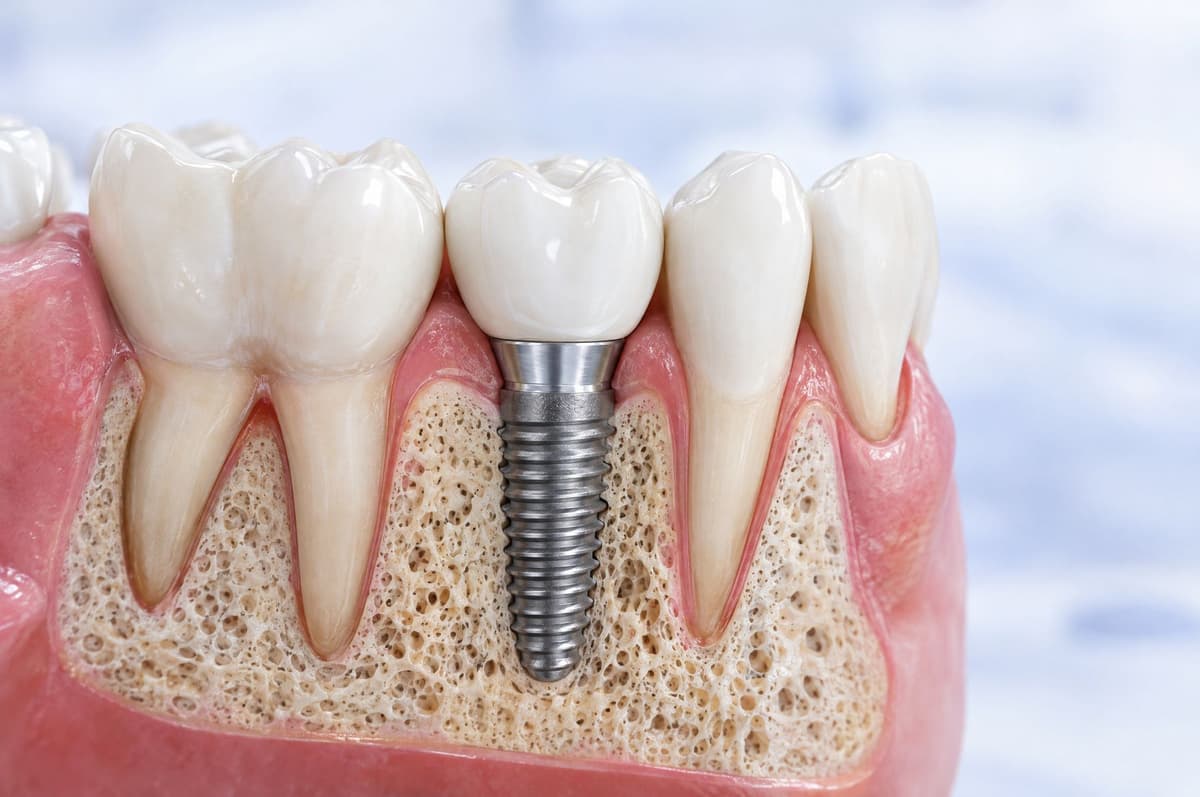
Because much of the healing happens under the gum. The bone fusing to the implant, osseointegration, takes months according to Cleveland Clinic. Follow-up visits let your dentist check that the gums and the implant are healing as they should before the final tooth goes on.
Keep those appointments even when you feel completely well. If you feel something change between visits, call us instead of waiting.
When should you call your dentist during recovery?
Call when something doesn't look like normal healing. Cleveland Clinic lists these signs:
- A loose or wobbly implant
- Bleeding gums
- Fever
- Pus around the implant
- Swollen gums
Pain that gets worse after the first few days, instead of easing, is also worth a call. It's better to ask than to wait.
How we guide your implant recovery at Smiles Creator
Every implant starts with a free consultation and a 3D CT scan in our office, so Dr. Ahdout can show you the plan and what the weeks afterward will look like. He places every implant himself.
If you're nervous about surgery, nitrous oxide and oral sedation are available, and he has provided sedation dentistry for more than 23 years. All-on-X starts from $12,995 per arch, including a complete examination with a 3D CT scan, four dental implants and fixed acrylic teeth. Financing through CareCredit, Cherry and Sunbit is available, subject to approval.
Your next step
If you're planning around work or an event, bring your calendar to a consultation. Read about dental implants at Smiles Creator, then book your free implant consultation or call (818) 340-3062. If nerves are part of the worry, see our sedation dentistry options.