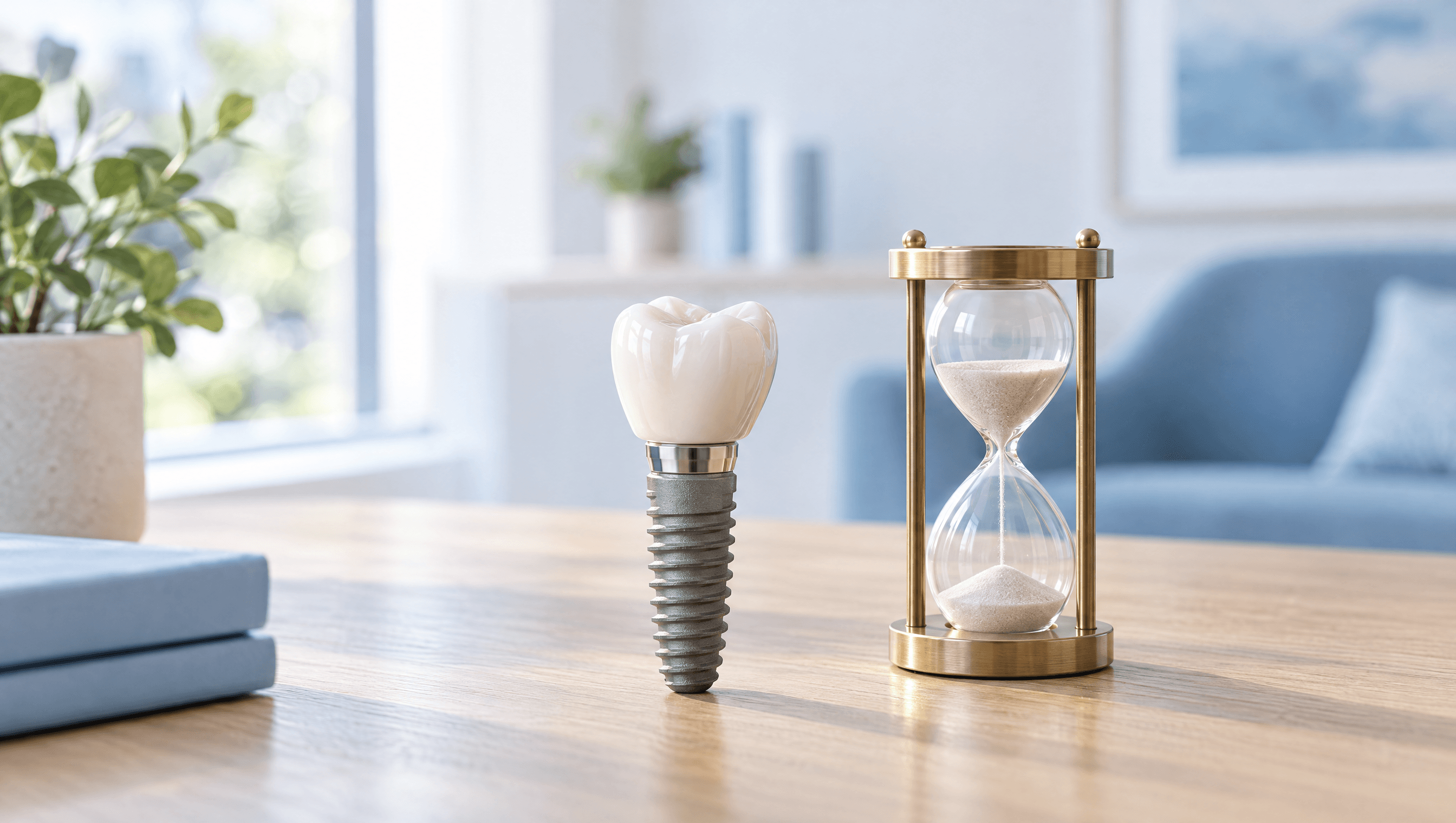
How long do dental implants last? The implant itself can last for decades: a 20-year review found that about 88 to 92 percent of implants were still in place after 20 years. The crown on top usually needs replacing sooner, because it wears like any crown. Daily cleaning and regular checkups make the biggest difference.
At Smiles Creator in Woodland Hills, Dr. Nader Ahdout places every implant himself and plans each one on a 3D CT scan taken in our office, so each implant starts in the right spot for the bone it needs.
| Part | What it is | How long it lasts |
|---|---|---|
| Implant post | The titanium root set in the jawbone | Often decades; rarely needs replacing |
| Connector (abutment) | The small piece joining the post to the tooth | Long-lasting; can be swapped if needed |
| Crown or bridge | The tooth you see and chew with | Wears over time and may one day need replacing |
How long do dental implants last on average?
Most implants last a very long time. A 2024 review in Clinical Oral Investigations pooled studies that followed implants for 20 years and found survival rates of about 88 to 92 percent, depending on how the studies were run. That's two decades with roughly nine out of ten implants still working.
Age on its own isn't a barrier either. A review in Clinical Oral Implants Research looked at patients aged 65 and older and found 96.2 percent of implants still in place after five years and 91.2 percent after ten.
Why the crown wears out before the implant
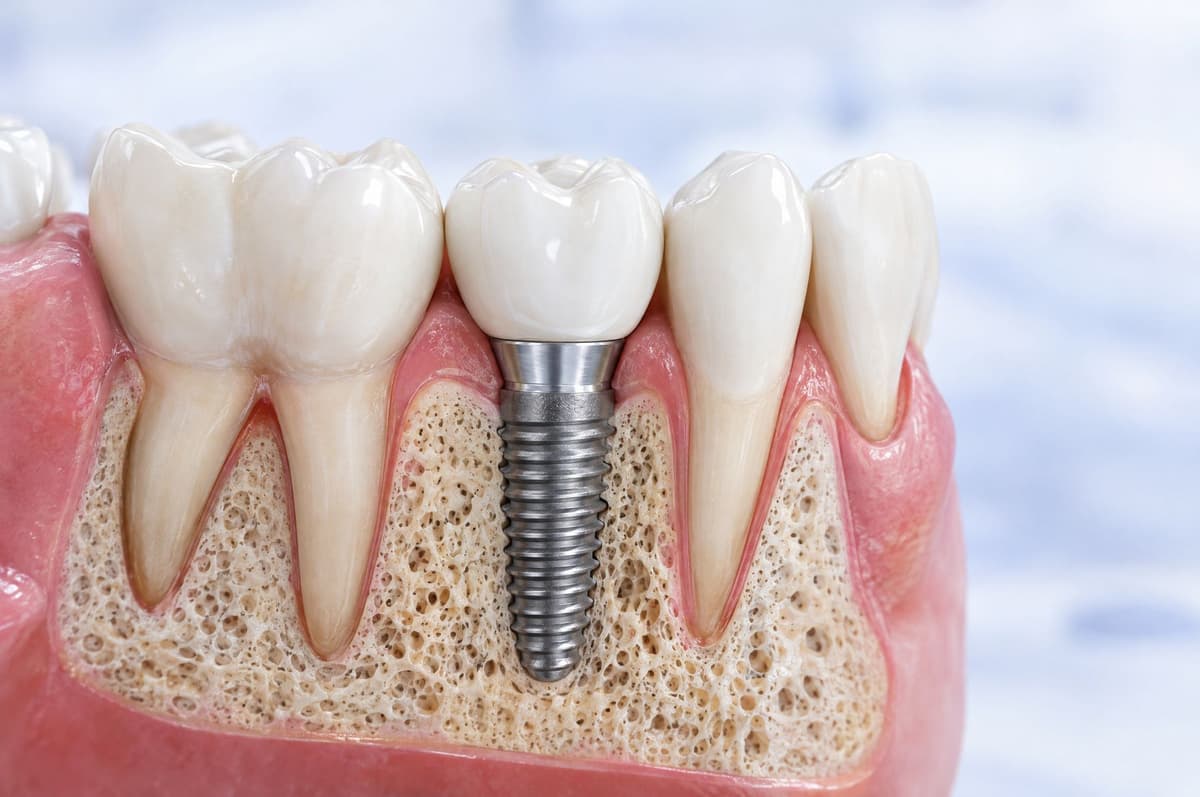
The implant post sits inside the bone, protected. The crown sits on top and takes every bite, so like any crown it wears over time. When a crown on an implant does need replacing, the implant underneath usually stays where it is, and only the crown is remade.
If you grind or clench your teeth, especially at night, that wear speeds up. Ask about a night guard, which protects implant crowns and natural teeth alike.
What makes dental implants fail?
The most common long-term problem is inflammation in the gum and bone around the implant. A 2025 review in the Journal of Periodontology, which pooled studies of more than 13,000 patients, found gum inflammation around implants (mucositis) in about 46 percent of patients and the more serious bone-loss form (peri-implantitis) in about 21 percent.
The same review identified smoking and a history of gum disease as risk indicators for both, and diabetes as a possible risk indicator for the more serious form. The good news is that mucositis can usually be reversed with better cleaning and a professional clean, which is why checkups matter so much.
The American Dental Association also notes that tobacco use and some chronic illnesses can slow healing after surgery, and that overall health matters more than age.
How do you clean dental implants?
Clean them every day, just like natural teeth, with extra attention where the crown meets the gum:
- Brush twice a day with a soft toothbrush, angled toward the gumline.
- Clean between teeth once a day with floss, small interdental brushes or a water flosser.
- Use a low-abrasive toothpaste so the crown keeps its shine.
- Keep your checkups and professional cleanings, so we can clean the spots that are hard to reach at home and spot gum changes early.

How long do All-on-4 implants last?
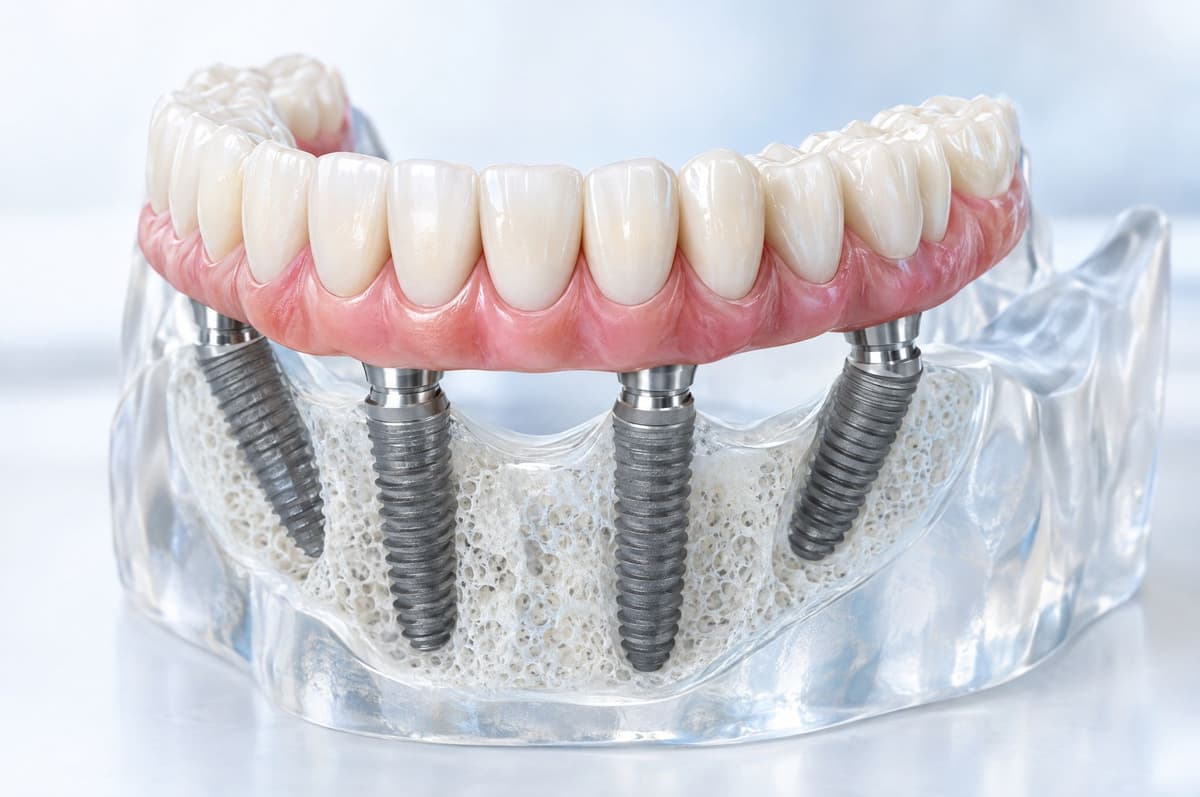
Full-arch treatment has a long track record too. A study of 561 patients treated with the All-on-4 approach, published in the International Journal of Implant Dentistry in 2023, followed people for 3 to 17 years and found that 97.4 percent of upper-jaw implants and 98.9 percent of lower-jaw implants were still in place.
All-on-4 teeth are fixed in place, so you can't take them out to clean. A water flosser or floss threader under the arch, plus regular checkups, keeps the gums around the implants healthy. You can read more on our All-on-4 and All-on-X page.
Habits that help dental implants last longer
Most of what decides how long an implant lasts happens after it's placed. These everyday habits make the biggest difference:
- Don't smoke or vape. Smoking is one of the clearest risk indicators for gum and bone problems around implants.
- Keep diabetes under control. Steady blood sugar helps the gums and bone stay healthy.
- Protect against grinding. A night guard takes the pressure off implant crowns while you sleep.
- Don't use your teeth as tools. Chewing ice, opening packages or biting hard objects can chip a crown.
- Keep every checkup. Small gum changes are easiest to fix when they're caught early, often with just a professional clean.
Signs to call your dentist
Call if you notice any of these around an implant, because they're easier to treat early:
- Gums that bleed, swell or look red around the implant
- A crown that feels loose or moves when you bite
- Pain, a bad taste or pus near the implant
- Gums that seem to be pulling back from the crown
How we help your implants last at Smiles Creator
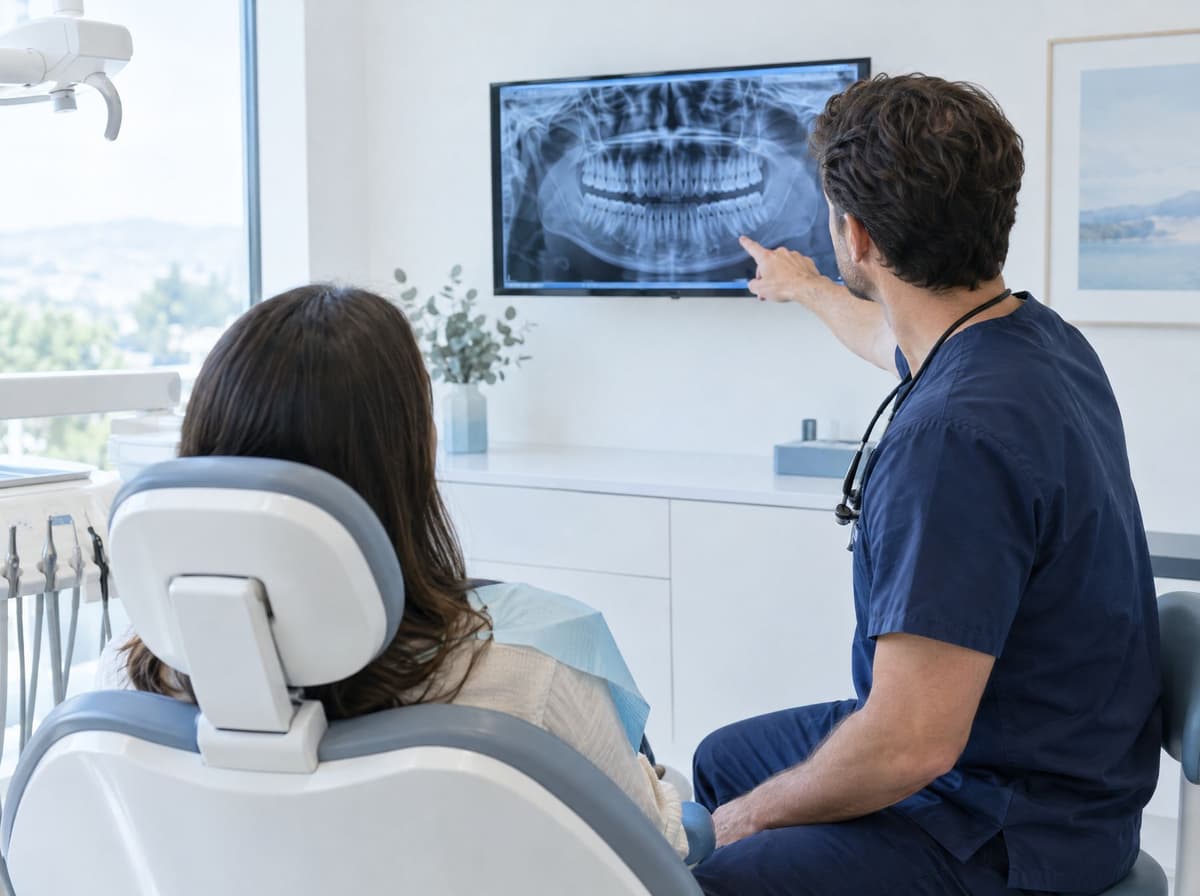
Dr. Nader Ahdout places every implant himself and plans each one on a 3D CT scan taken in our office, so we can see the bone and choose the right position before anything starts. Digital X-rays at checkups let us keep an eye on the bone around each implant over the years.
If you're nervous about treatment, nitrous oxide and oral sedation are available; Dr. Ahdout has provided sedation dentistry for more than 23 years.
Your next step
If you're weighing an implant or want an existing one checked, book a visit or call (818) 340-3062. You can also read more about dental implants in Woodland Hills, including the free implant consultation.