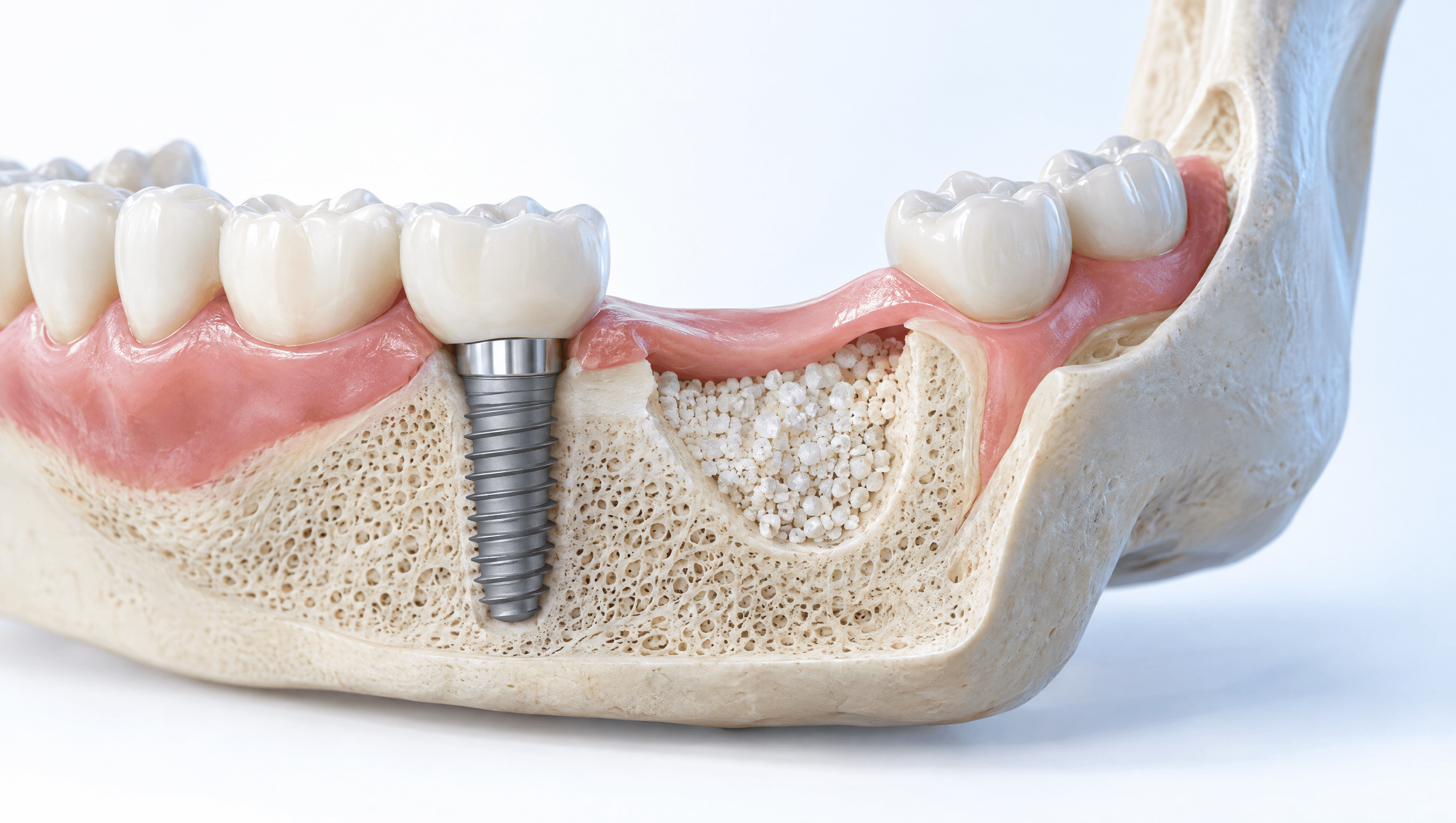
A bone graft for a dental implant adds bone where your jaw has become too thin or too short to hold an implant securely. Not everyone needs one. A small graft needs at least three months to heal, while a large one can take nine to 12 months, and a 3D scan of your jaw shows which applies to you.
At Smiles Creator in Woodland Hills, Dr. Nader Ahdout places every implant himself and plans each one on a 3D CT scan taken in our office, so you know whether you need a graft before treatment starts.
| Type of graft | What it does | When it's used |
|---|---|---|
| Socket graft | Fills the empty socket after a tooth is removed | At the extraction, to limit shrinking |
| Ridge augmentation | Adds width or height to the jawbone | Where a tooth has been missing a while |
| Sinus lift | Adds bone under the sinus floor | Upper back teeth with short bone |
| No graft | The implant goes straight into your own bone | When the scan shows enough bone |
What is a bone graft for a dental implant?
A bone graft is a small procedure that rebuilds jawbone so an implant has something solid to hold on to. The dentist places bone-building material where bone is missing, and over the following months your own bone grows into it and gradually takes its place.
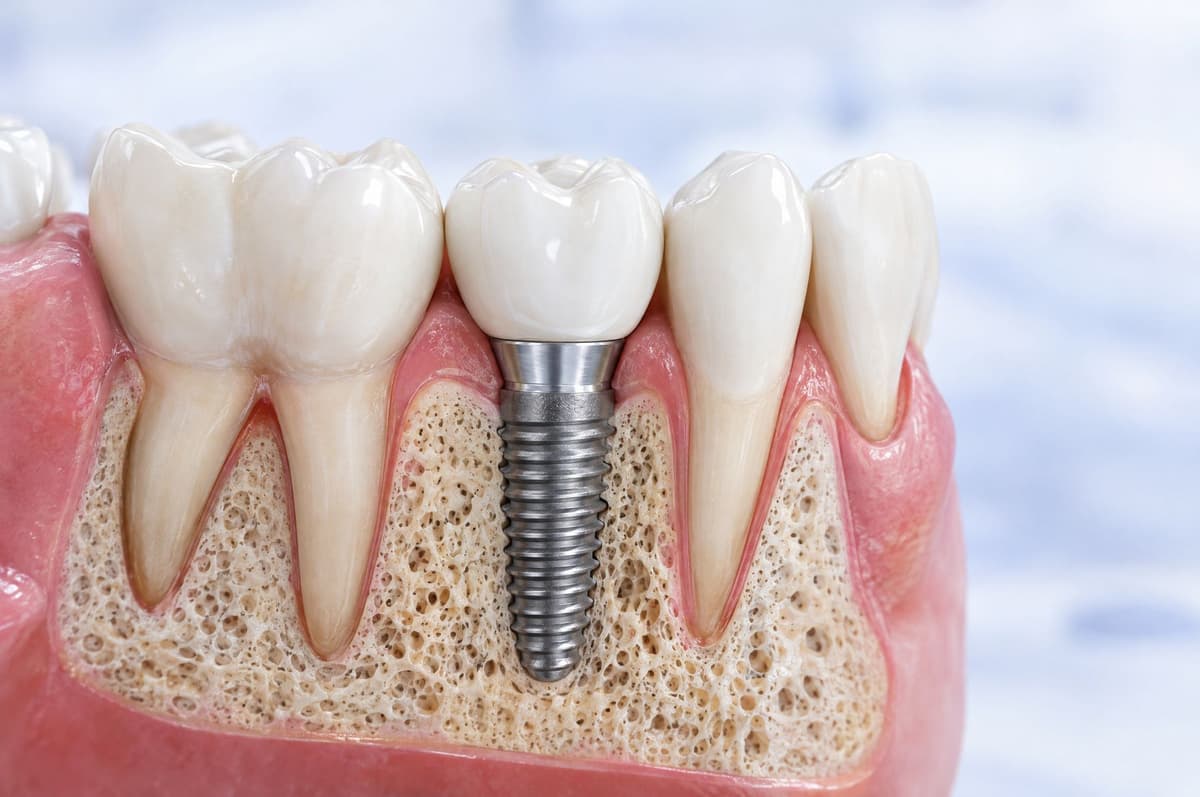
This matters because of how implants work. As the American Dental Association explains, what makes an implant strong is that the bone grows around it and holds it in place. If there isn't enough bone around the implant, it has nothing firm to fuse with.
According to Cleveland Clinic, grafts are used to fill an empty socket after an extraction, to increase the width and volume of the jawbone, to lift the sinus floor, and to treat bone lost to gum disease. Success rates reach up to 100 percent, depending on the type of graft.
Why does the jawbone shrink after a tooth is lost?
The bone around a tooth root stays healthy partly because the tooth is there. Once a tooth is removed, that ridge of bone starts to shrink, and most of the change happens quickly.
A systematic review in Clinical Oral Implants Research found that in the six months after an extraction, the ridge lost 29 to 63 percent of its width and 11 to 22 percent of its height. The losses were fastest in the first three to six months and slowed after that.
Width shrinks more than height, which is why a ridge can look fine from above but turn out to be too narrow for an implant on a scan. Gum disease, an injury or a difficult extraction can add to the loss.
Do you always need a bone graft for a dental implant?
No. Many people have enough bone for an implant, especially when the tooth was lost recently and there's no advanced gum disease. Whether you need a graft depends on what the scan measures: how wide the bone is, how tall it is, and in the upper back jaw, how close it sits to the sinus.
A graft is more likely if:
- The tooth has been missing for a long time
- Gum disease or an infection has eaten away bone
- The tooth is an upper back tooth sitting just under the sinus
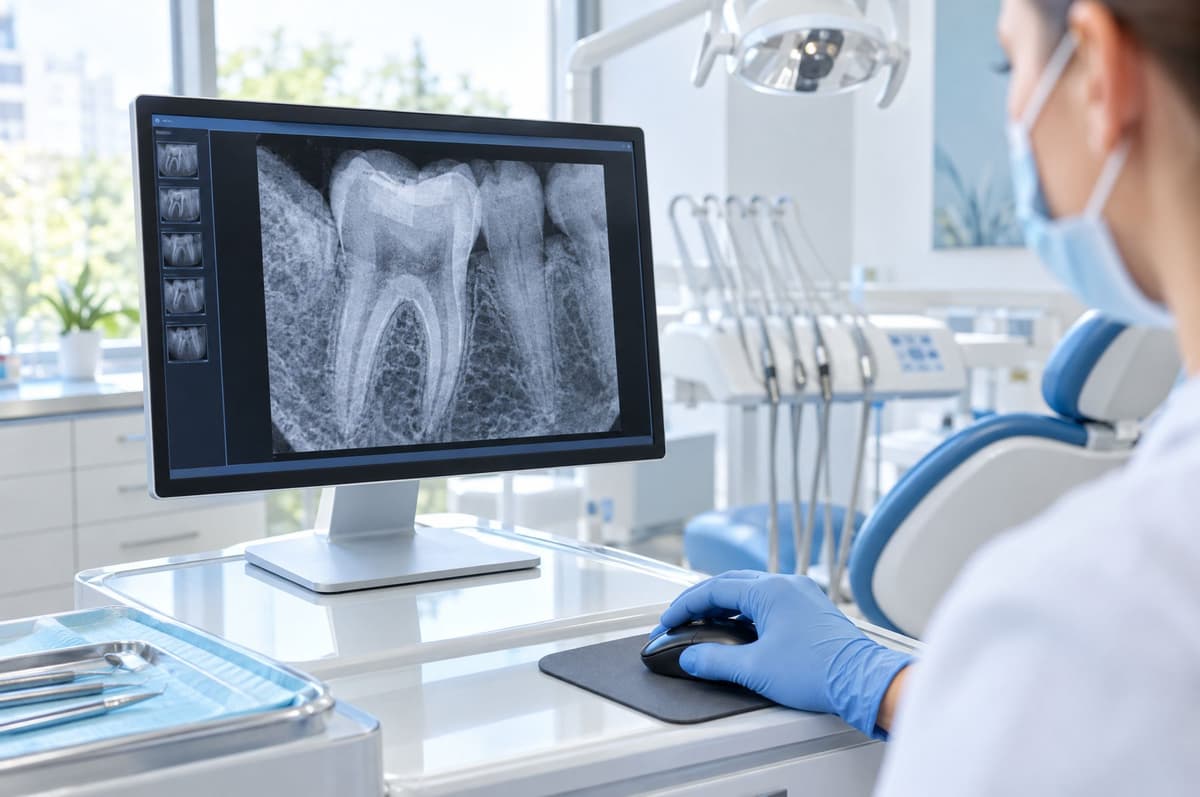
The only way to know is to measure. A regular X-ray is flat, while a 3D CT scan shows the bone from every side, so the decision is based on real measurements rather than a guess.
What is used for bone grafting in dental implants?
The material can come from a few places. Cleveland Clinic lists four main types:
- Your own bone (autograft), taken from another area of your body
- Donor bone (allograft), human bone from a licensed tissue bank
- Animal-derived bone (xenograft), also from a licensed bank
- A lab-made substitute (alloplast)
Most grafts work as a scaffold. Your body slowly replaces the material with its own bone, which is why healing takes months rather than days. The right material depends on how much bone is needed and where.

How is a bone graft done?
A bone graft is usually done in the dental chair. The area is numbed with local anesthetic, and sedation is available if you'd rather be more relaxed. The gum is gently opened, the graft material is placed against the bone, and the gum is closed with stitches.
Socket graft at the time of an extraction
If a tooth is being removed and an implant is planned later, graft material can be placed straight into the empty socket. A 2021 Cochrane review found this may reduce the loss of ridge height and width over the following six months, though the evidence is still uncertain.
Ridge augmentation
Where a tooth has been gone for a while, material is added along the side or top of the ridge to rebuild its width or height. The area is then left to heal before the implant goes in.
Sinus lift
The upper back teeth sit just below the sinus. When the bone there is short, the sinus floor is gently raised and graft material placed underneath, giving the implant more bone to sit in.

Can you get dental implants with bone loss?
Often, yes. Bone loss doesn't automatically rule out implants. Depending on what the scan shows, there are a few ways forward.
- Rebuild the bone first. A graft adds the missing bone, and the implant goes in once it has healed.
- Use a shorter implant. A 2018 meta-analysis in The Open Dentistry Journal found that short implants of 7 mm or less had survival rates similar to longer implants placed in grafted bone after one year, with less bone loss around them.
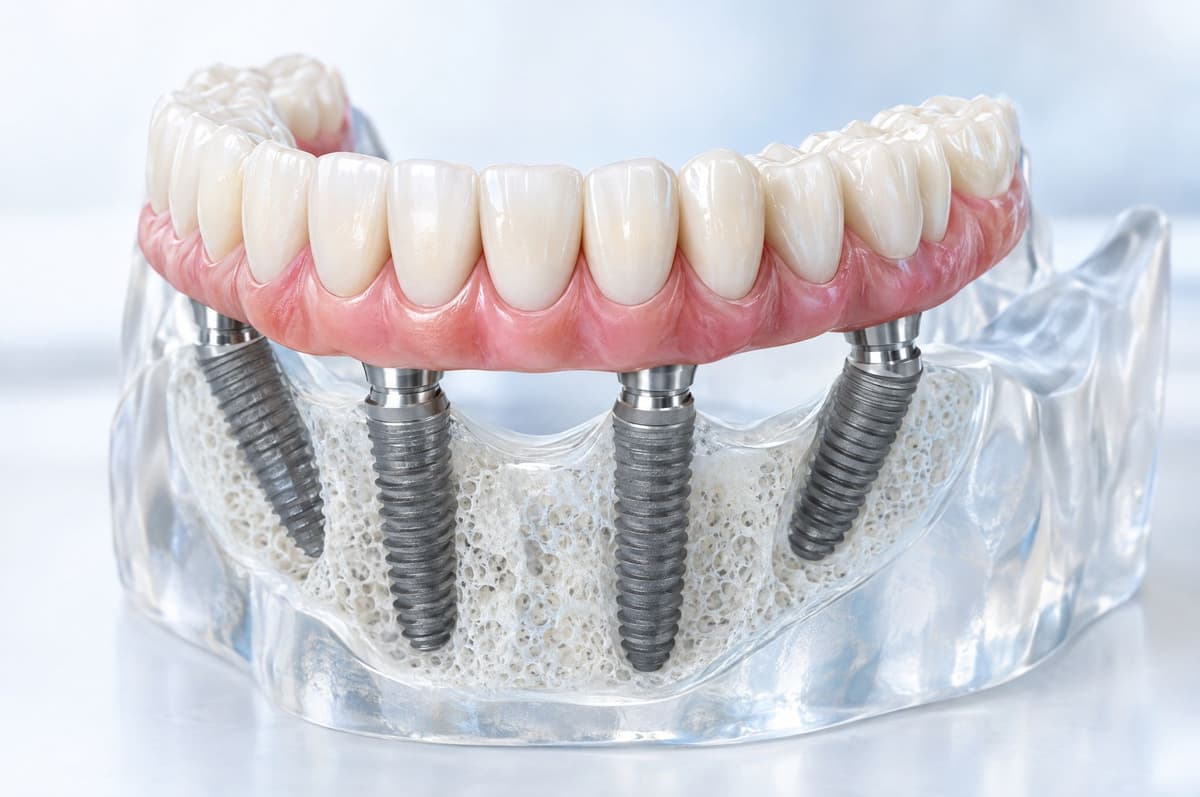
- Angle the implants. For a full arch, All-on-4 tilts the back implants. A 2023 study in the International Journal of Implant Dentistry notes that tilting lets a longer implant fit, and that the original All-on-4 method avoided a bone-building step called guided bone regeneration.
Your general health counts too. The American Dental Association notes that health is more of a factor than age, and that conditions such as uncontrolled diabetes can interfere with healing. If you've worn a denture for years, our post on dental implants for seniors covers what that means for your bone.
What does recovery from a bone graft feel like?
Most people report little to no pain. Cleveland Clinic says initial recovery takes about a week, with some tenderness, swelling or bruising that usually settles within a week or two.
The graft itself needs at least three months to heal, and a large graft can take nine to 12 months. Once it has healed, the implant should ideally be placed within six to 12 months, before the new bone starts to shrink again.
These steps help the graft heal well:
- Use ice packs on the outside of your jaw and keep your head raised to limit swelling
- Eat soft foods for a few days and keep the area clean
- Don't spit, swish hard or poke at the area
- Skip alcohol for at least two weeks and heavy exercise for at least 48 hours
- Don't smoke or vape, since smokers have a higher chance of a graft failing
Call the office if swelling gets worse after the first few days, or if you notice pus, severe pain or a fever.

How we check your bone at Smiles Creator
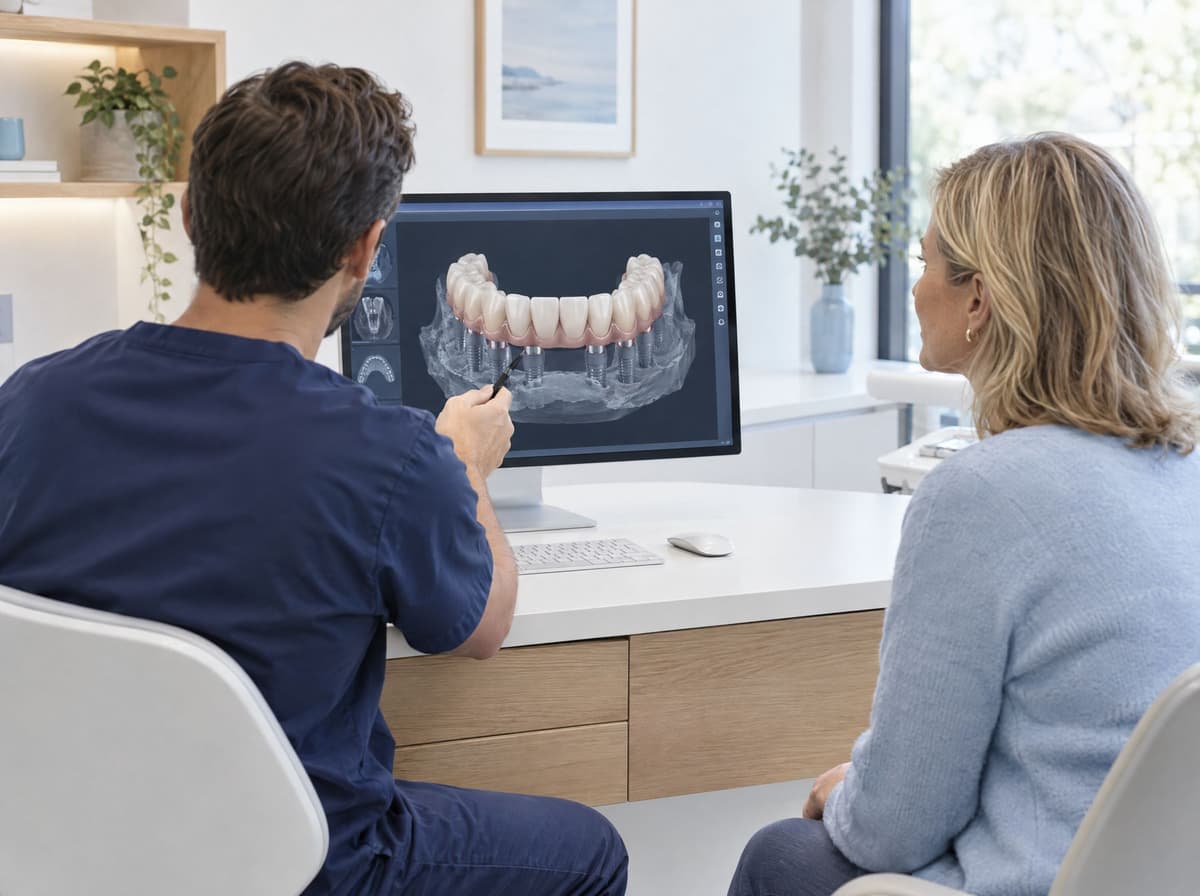
Every implant plan at Smiles Creator starts with a 3D CT scan taken in our office. Dr. Nader Ahdout uses it to measure the width and height of your bone and see how close it sits to the sinus, so you know at your first visit whether a graft is part of your plan.
Dr. Ahdout places every implant himself, from a single tooth to a full arch. For full-arch treatment, All-on-4 and All-on-X uses as many implants as your jaw needs, and you leave with temporary teeth the same day as surgery.
If you're nervous, nitrous oxide and oral sedation are available; Dr. Ahdout has provided sedation dentistry for more than 23 years. Consultations for implants are free, and financing through CareCredit, Cherry and Sunbit is available, subject to approval.
Your next step
If you've been told you might need a bone graft, or you're not sure whether you have enough bone, a scan will give you a clear answer. Read more about dental implants in Woodland Hills, then book your free implant consultation or call (818) 340-3062. We'll take the scan, talk you through what it shows, and plan your dental implant treatment from there.