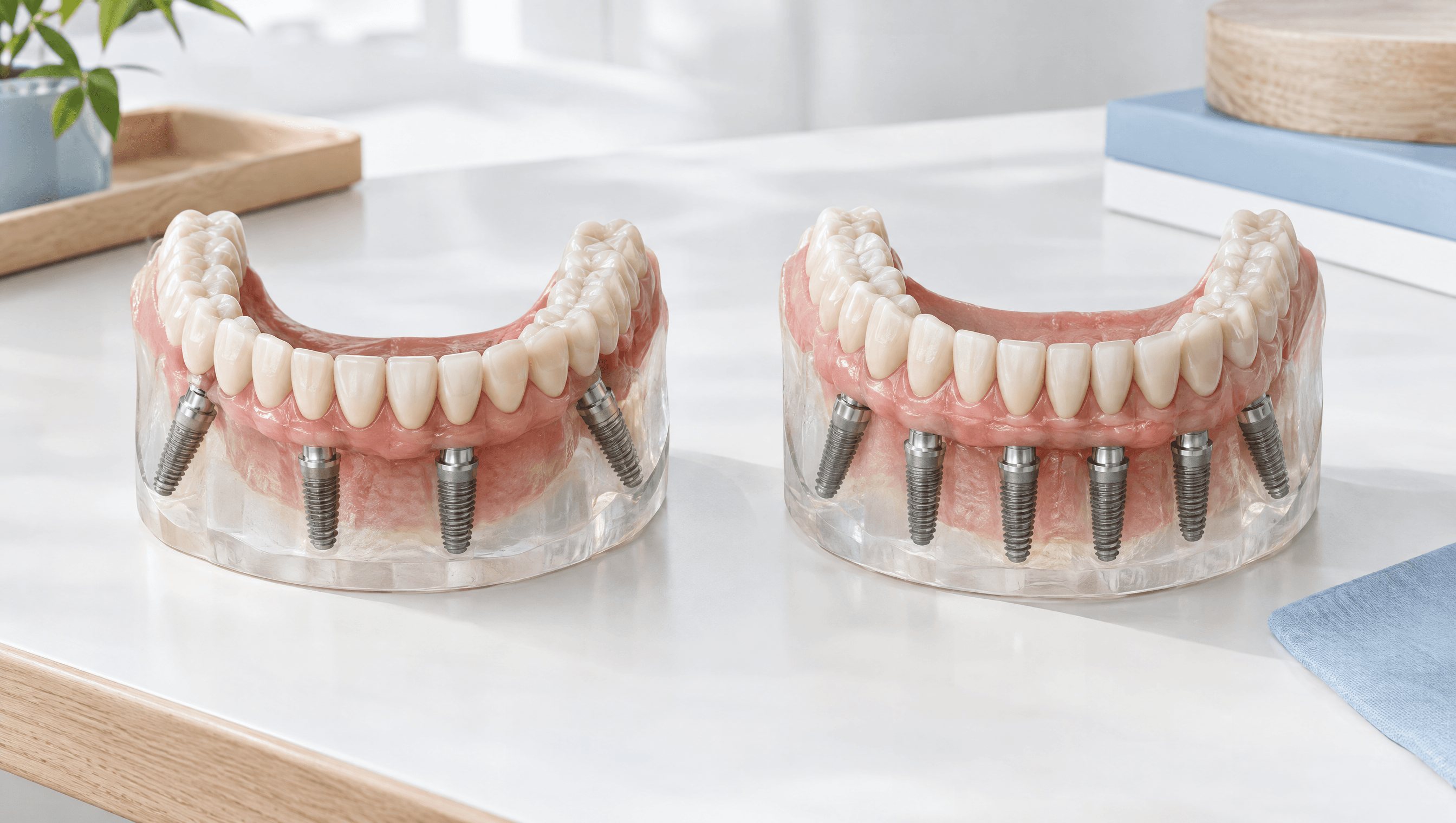
All-on-4 vs All-on-6 is a choice between four and six dental implants holding one fixed arch of teeth. A 3 to 13 year study of 217 patients found no significant overall difference in implant or prosthesis survival. Your bone, your bite and a 3D scan decide which number suits you.
At Smiles Creator in Woodland Hills, Dr. Nader Ahdout places every implant himself and plans each one on a 3D CT scan taken in our office.
| Option | Implants per arch | Teeth |
|---|---|---|
| All-on-4 | Four | Fixed, one arch |
| All-on-6 | Six | Fixed, one arch |
| Snap-in denture | Varies | Removable daily |
| Regular denture | None | Rests on gums |
What is the difference between All-on-4 and All-on-6?
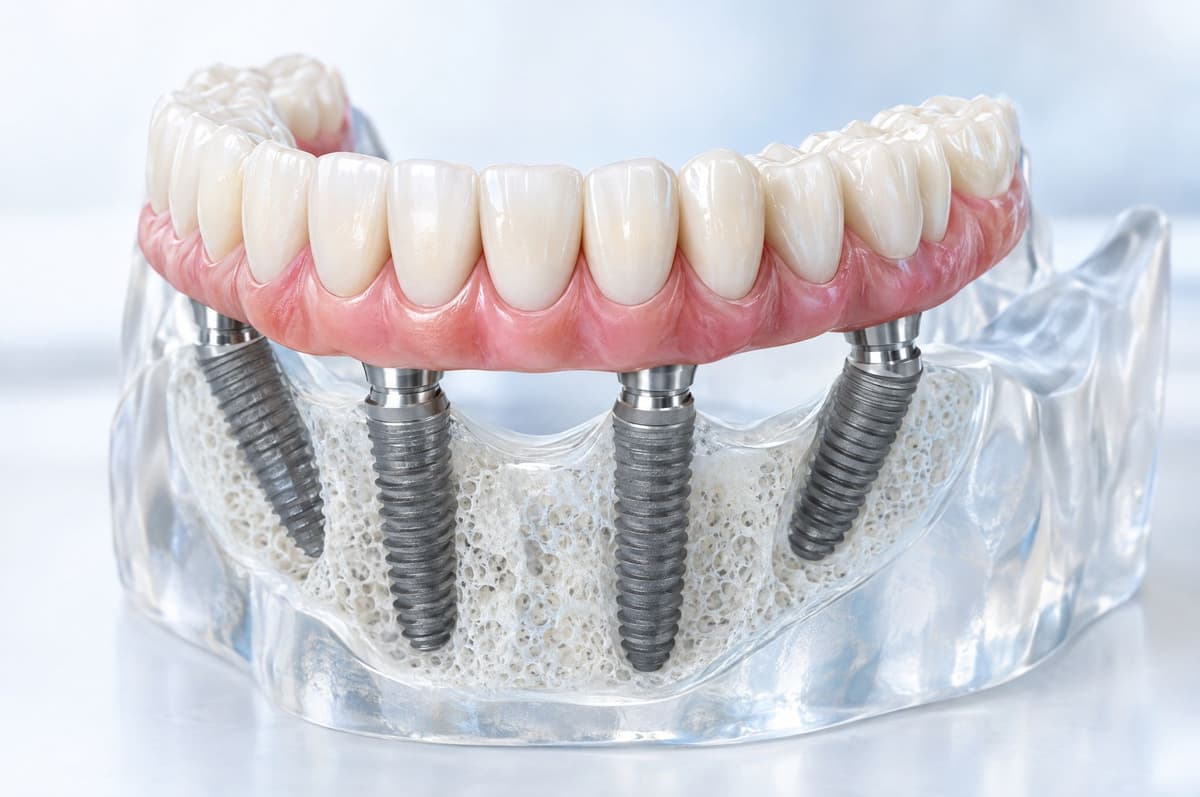
The difference is the number of implants under the arch of teeth. The teeth themselves are fixed in both cases, and you don't take them out at night.
All-on-4 is more flexible than the name suggests. A 2023 study in the International Journal of Implant Dentistry describes four implants as the starting point, with more added if an implant of 10 mm or longer can't be placed or if the implant isn't firm enough at placement. At Smiles Creator we call the full-arch approach All-on-X for the same reason: it uses as many implants as your jaw needs.

Is All-on-6 better than All-on-4?
Not in general. In a study in Clinical Implant Dentistry and Related Research, researchers followed 217 patients for 3 to 13 years: 202 prostheses on four implants and 69 on six. Overall, the two groups did not differ significantly in implant survival, prosthesis survival, complications or bone loss around the implants.
The same study found six implants looked more predictable in some groups. These included older patients, smokers, people who grind their teeth, people with long cantilevers (teeth that extend past the last implant) and people with low bone density. A study like this describes groups of patients, so it can't tell you which number is right for you.
What decides how many implants you need?
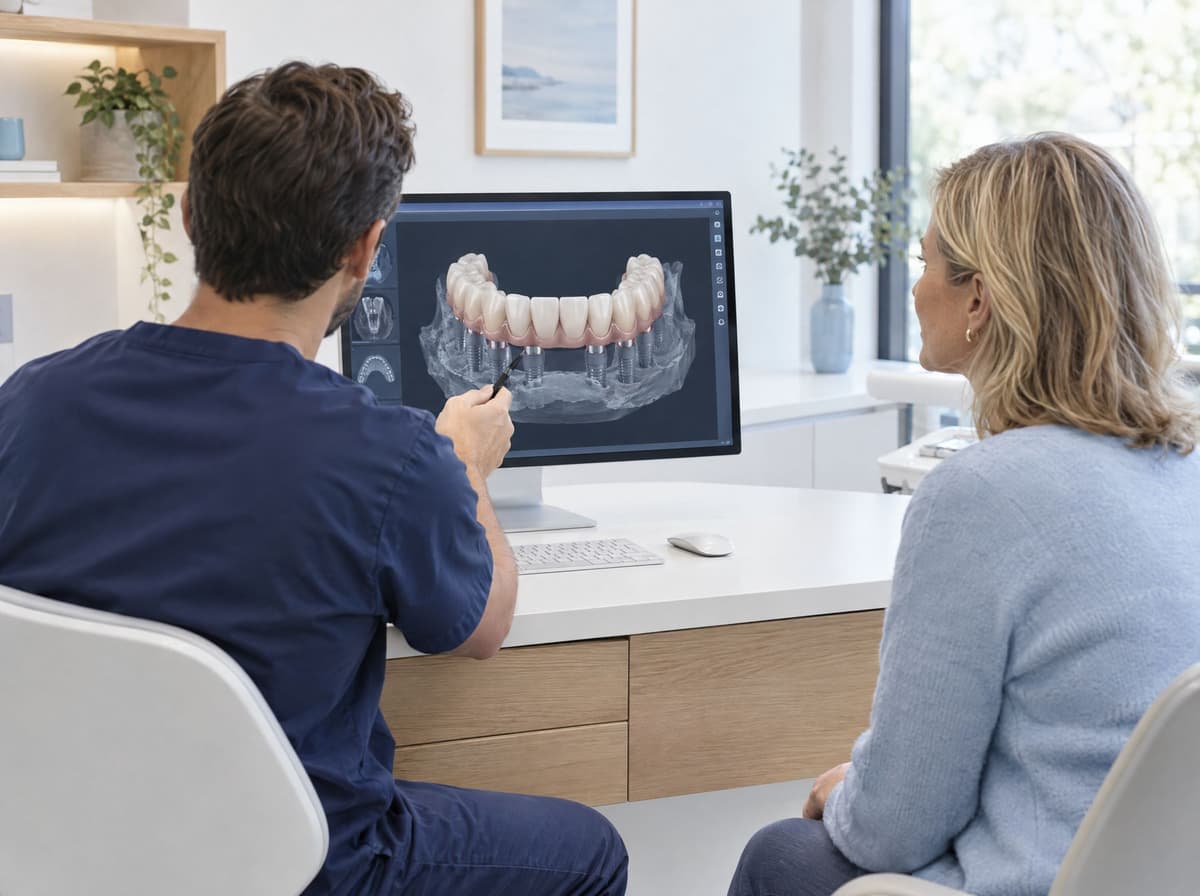
Your bone, your bite and your habits decide. The scan shows where the bone is wide and tall enough to hold an implant firmly, and the dentist plans around that.
- Bone quantity and quality: low-density bone may call for more implants to share the load
- Bite forces: grinding or clenching puts extra stress on the teeth
- Jaw: the upper and lower jaw behave differently, and the 2023 study above found upper-jaw implants had a slightly lower survival rate (97.4% against 98.9% in the lower jaw)
- General health: the American Dental Association notes that tobacco slows healing and that conditions like diabetes may interfere with it
How long do All-on-4 implants last?
Research on the All-on-4 method is encouraging. The International Journal of Implant Dentistry study followed 561 patients with 2,364 implants for 3 to 17 years, and implant survival was 97.4% in the upper jaw and 98.9% in the lower jaw. Nineteen of the 22 upper-jaw failures happened within the first 24 months, so early healing matters most. These are group figures, not a promise for any one person.
All-on-4 vs dentures: what changes?
With All-on-4, your teeth attach to the jawbone through implants. Cleveland Clinic explains that regular dentures rest on top of your gums, while implant-supported teeth are anchored in the bone, giving improved stability for chewing, eating and speaking.
The trade-offs are real. Implants need surgery, and Cleveland Clinic says healing takes about three to six months on average. A regular denture is quicker and costs less to start with, so it can still be the right answer for some people.
Snap-in dentures vs All-on-4: which is which?
A snap-in denture clicks onto implants and comes out every day for cleaning. All-on-4 teeth are fixed, so you can't remove them at home, and your dentist takes them off for maintenance when needed. Both are described this way by Cleveland Clinic.
Implant-supported dentures vs All-on-4: are they the same?
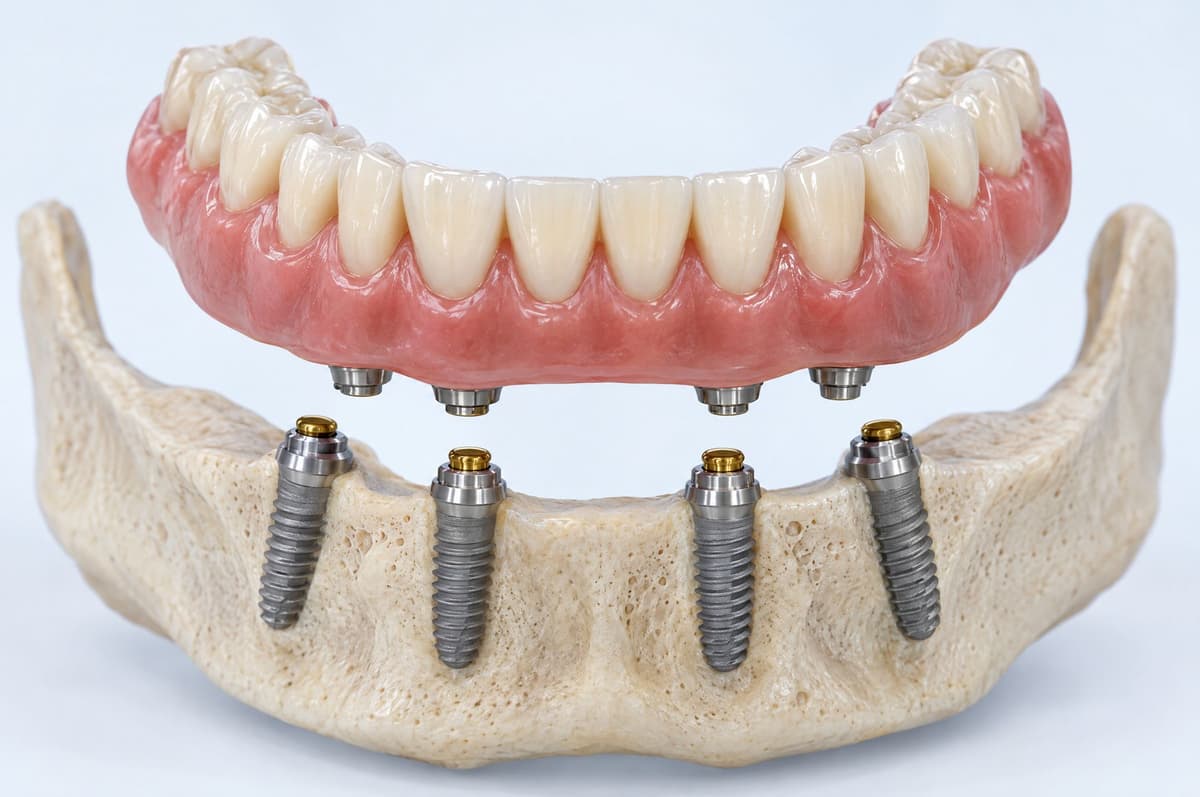
All-on-4 is one kind of implant-supported denture, not a competitor to it. Cleveland Clinic describes the term All-on-4 as a specific type of fixed implant denture that replaces an entire arch on four implants. "Implant-supported denture" also covers removable versions.
Either way, you need enough jawbone for the implants. Bone grafts can add bone where it has been lost, which we cover in our post on bone grafts for dental implants.
How we choose at Smiles Creator
Every full-arch plan starts with a free consultation and a 3D CT scan in our office. Dr. Ahdout shows you the plan on the scan, including how many implants you need, the timeline and the cost, before anything starts.
All-on-X at Smiles Creator starts from $12,995 per arch, which includes a complete examination with a 3D CT scan, four dental implants and fixed acrylic teeth. You leave with temporary teeth the same day as surgery. Zirconia teeth are available, so ask about the cost at your consultation. Nitrous oxide and oral sedation are available if you're nervous, and financing through CareCredit, Cherry and Sunbit is subject to approval.
Does All-on-6 cost more than All-on-4?
Cost depends on how many implants your plan needs, the type of teeth, and whether extractions or a bone graft are part of it. We can't give a price without your scan. Our starting price covers four implants, and if your plan calls for more, Dr. Ahdout shows you the cost at your consultation.
Your next step
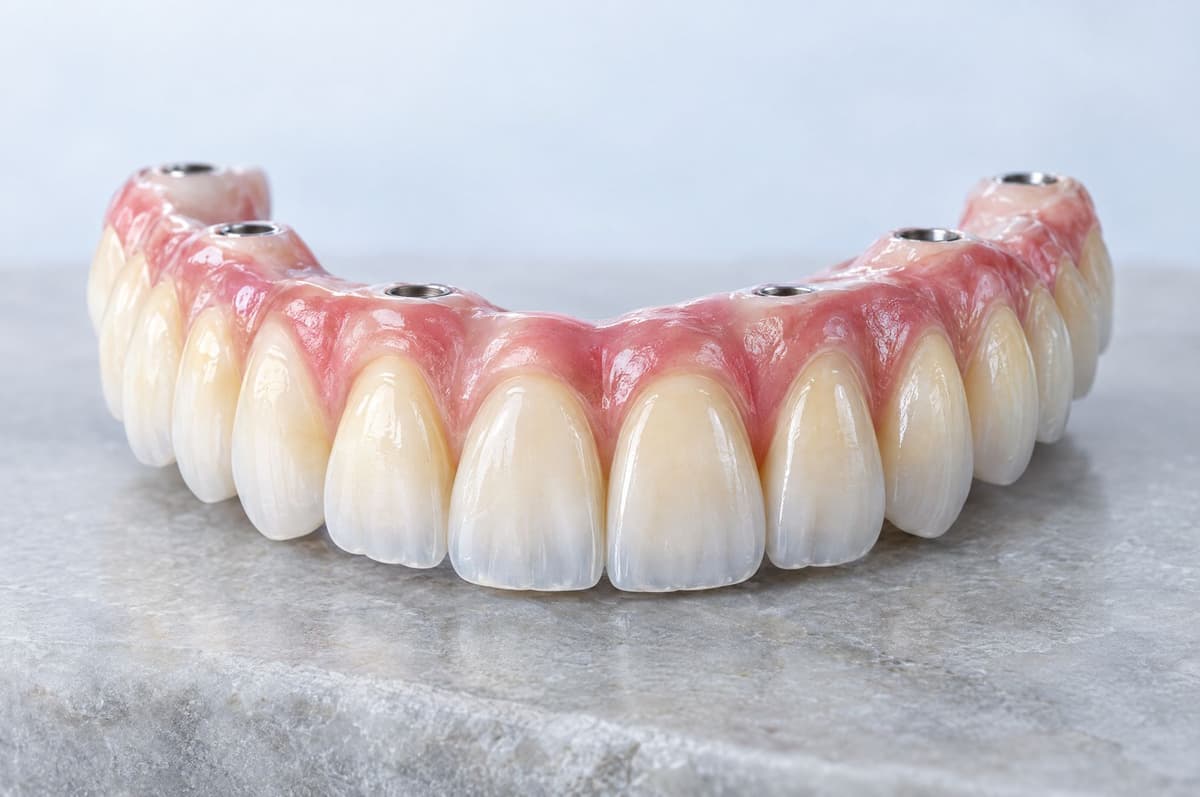
If you're weighing four implants against six, a scan gives you a real answer. Read about All-on-4 and All-on-X dental implants, then book your free implant consultation or call (818) 340-3062. We'll talk through your full-arch options, and you can compare them with what full mouth dental implants cost.